Thursday, August 1, 2013

Learn from Failures


All of us fail at one time or another. Successful hunters fail often. What separates them from the rest is they learn more and faster from that failure than everyone else does.
When you fail, and you will, decide what you can learn from it so you won’t make the same mistakes twice. Hunters who blamed others for their failure will never learn from failure, because they’ve never done it.


Knowledge is the positive upside to failure.


-Jim


Tuesday, July 30, 2013

Small Details Equals Bigger Bucks

In our rush to kill a big buck, we sometimes forget something essential: if our tactics don’t work in one location, it’s extremely unlikely they will work in another location.
Ineffective tactics do little more than waste our time.

You’ll harvest bigger bucks when you obsess about the tiny details. Overhauling how you hunt is almost always a better way to spend your time than trying to double the number of places you hunt.


-Jim


Sunday, July 28, 2013

The Key Focus

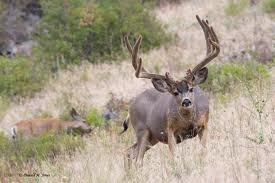
The most important player in hunting is the deer. You must focus on the deer at all times. Deer are fickle, changeable, impatient, and elusive. Too many hunters want the deer to adapt to their strategies. Nonetheless, it’s the deer who sets the pace and rhythm of the hunt and we must adapt to their movements.

Jim
Learn More About Mule Deer Hunting Here

http://jimcollyer.com/

Friday, July 26, 2013

Blood in the Tracks

"Big bucks don’t want to be found, and that’s exactly why they are so hard to find."

Have you ever wondered why some hunters are wildly successful while others--maybe even you--struggle?
Great news: I know precisely why. And the even better news is that the truth behind what makes some hunters successful, while others struggle, can be learned.
You may or may not know this, but when I was young, I couldn’t hunt my way out of a brown paper bag. I stumbled, failed, and learned a lot of lessons throughout the years. In fact, I’ve spent the decades since then perfecting those lessons, culling them down into a science.
I'm going to share my experience with you!
My book, Blood in the Tracks, is the tale of my journey towards hunting success – the funny, exhausting, heart-stopping whole of it – PLUS the lessons it taught me, and how you can apply those lessons to your deer hunting.
In 170 pages, I unravel one of hunting greatest mysteries: trophy mule deer success. Why do some people seem to experience it almost effortlessly, while others seem to seek it continuously?
And is it possible to become a more successful hunter? The short answer is, yes. It takes some mind-shifting, some serious thinking, and even some hard-to-make habit changes – but in the end, you have the potential inside of you to achieve the success you crave.

Jim

Learn more here

http://jimcollyer.com/

Wednesday, July 24, 2013

Relocating Summer Bucks


When trying to relocate bucks, I draw a three-mile-radius circle on a map with the summer range at the center. Next I search this circle for feed, water, and preferred bedding areas. Then it’s time to get the spotting scope out and hit the trail.

I did just that a couple of years ago. I found a promising ridge and decided to walk it out. The first basin was deserted, and so was the second. In the third basin, I found the deer. I watched the bucks until they bedded for the day.

Stay as far away from the deer as possible. The damage from overscouting is always irreparable.

Jim

More on Scouting Here

http://jimcollyer.com/

Monday, July 22, 2013

Early Season


The key to early-season hunting is food sources. The bucks are gorging themselves to build fat reserves for the upcoming rut and winter. The largest bucks will be found in the best and most abundant food source in the area. The bucks’ actions and movements are much more predictable now.

 The deer have a regular routine, and intercepting a buck between bedding and feeding areas is the best way to hunt early in the fall. Both morning and evening hunts can be equally successful.

              There is a lot more to their lives when the velvet comes off. Having lived in harmony all summer, the bucks are now increasingly aggressive and begin to challenge each other. The younger bucks begin sparring regularly. Mature bucks, uninterested in establishing a pecking order, move off. The bigger bucks are not roaming around aimlessly. They have moved to more remote areas, waiting for the rut. Sometimes bucks will relocate several miles from their summer range, but usually they will set up temporary residence within three miles.
 
Jim
 

Sunday, July 21, 2013

Scouting Mule Deer


Great hunters spend far more time investigating (scouting) than they do hunting. Good hunters are good detectives and have honed their investigative (observation) skills. Good scouting is not so much looking for answers as it is looking for the questions. In nature, nothing is random and nothing happens by accident. The when and the where are a lot easier to figure out if we know what makes the wheel go around.

 We can become effective hunters only when we understand the deer’s needs and wants. This is done first by careful observation and then by asking ourselves what, where, why, and when. Most hunts fail due to poor observations and poor fact-finding techniques. When scouting, it’s best not to make snap judgments. Instead, spend time being aware of our surroundings and, later, meditating on them. Analyze yourself, analyze the deer, and analyze the situation.
 
Jim